
Understanding the Basics: What is SEO?
SEO stands for Search Engine Optimization. It’s the practice of increasing the quantity and quality of traffic to your website through organic search engine results. Unlike paid ads, organic traffic is “free” traffic that comes from users finding your site on search engines like Google, Bing, or DuckDuckGo.
To put it simply, SEO involves making specific changes to your website design and content that make your site more attractive to a search engine. The goal is to have the search engine display your website as a top result on the search engine results page (SERP) when someone searches for a relevant keyword.

How Do Search Engines Work?
To understand SEO, you first need to understand how search engines work. They have three primary functions:
- Crawling: Search engines send out a team of robots (known as crawlers or spiders) to find new and updated content. Content can be a webpage, an image, a video, a PDF, etc.
- Indexing: Once they find this content, they store and organize it in a massive database called an index. Think of it as a giant library for the internet.
- Ranking: When a user performs a search, the search engine sifts through its index to provide the most relevant and high-quality results for that query. This ordering of results is known as ranking.
Your job with SEO is to make it as easy as possible for search engines to crawl, index, and understand your content.
The Key Pillars of SEO
SEO is often broken down into three main categories. Understanding these pillars is fundamental to building a successful SEO strategy.
1. On-Page SEO
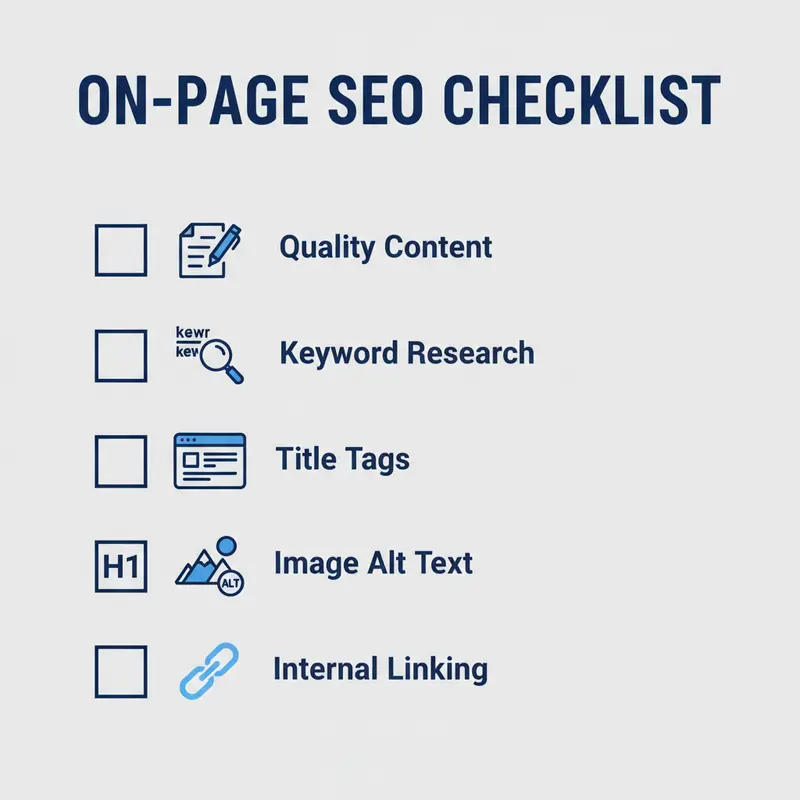
On-Page SEO refers to all the optimizations you do on your website. This includes optimizing your content and HTML source code. Key elements include:
- Keyword Research: Finding the terms your target audience is searching for.
- High-Quality Content: Creating informative, engaging, and original content that satisfies the user’s search intent.
- Title Tags & Meta Descriptions: Crafting compelling titles and descriptions that appear in the SERPs.
- Header Tags (H2, H3): Structuring your content logically to improve readability for both users and crawlers.
- Image Optimization: Using descriptive alt text and compressing images for faster load times.
2. Off-Page SEO
Off-Page SEO refers to actions taken outside of your own website to impact your rankings. This is largely driven by building your site’s authority and reputation. The most important factor is:
- Backlinks: These are links from other websites to your website. Search engines see backlinks as votes of confidence, indicating that your content is valuable and trustworthy.
3. Technical SEO
Technical SEO ensures that your website can be effectively crawled and indexed by search engines. It has less to do with the actual content and more to do with the site’s infrastructure. Key aspects include:
- Site Speed: How quickly your pages load.
- Mobile-Friendliness: Ensuring your site works well on mobile devices.
- Site Architecture: A logical structure that helps search engines find all your pages.
- XML Sitemap: A file that lists all the important pages on your site.
Why is SEO Important?
In today’s digital world, search is the primary way users discover content. Billions of searches are conducted every day. Having a strong presence on search engines is a fundamental part of any digital marketing strategy, leading to more traffic, more leads, and ultimately, more revenue.
